


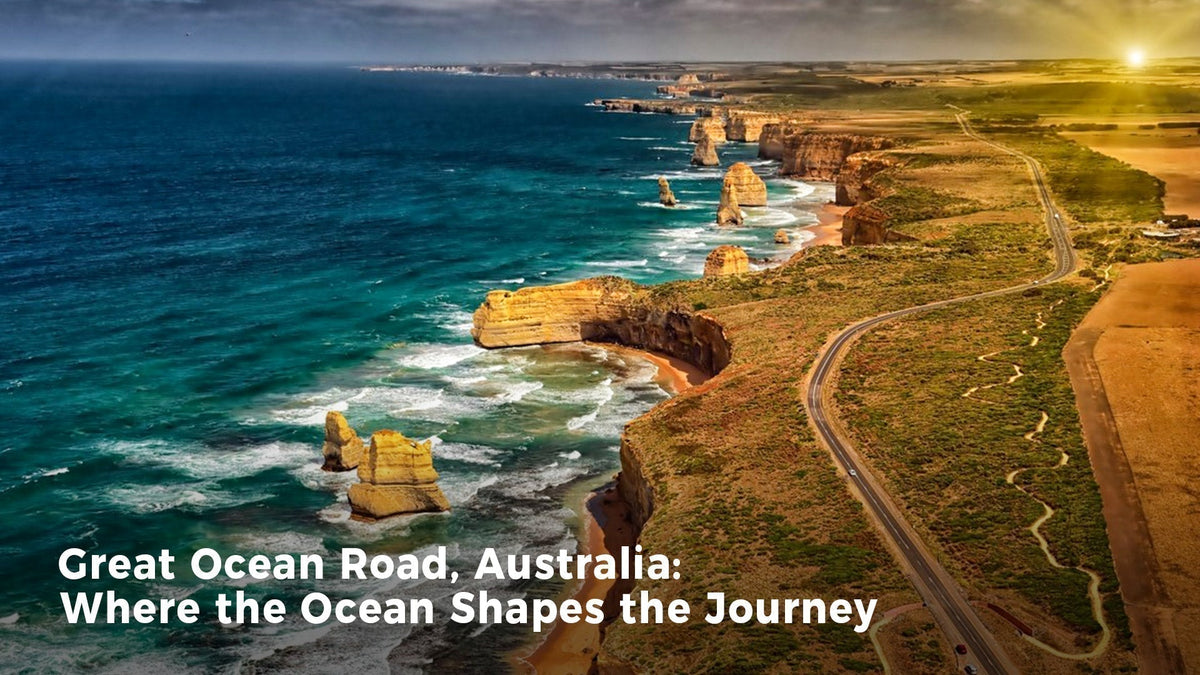
Great Ocean Road, Australia
Where the Ocean Shapes the Journey
There’s a stretch of coastline along southern Australia where the road feels less engineered and more carved by the sea itself.
The Great Ocean Road winds through Victoria’s rugged coastline, passing limestone cliffs, rainforest pockets, crashing surf, and endless ocean horizons.
What begins as a scenic drive gradually becomes something slower, quieter, and far more immersive.
1. The Experience of Driving the Great Ocean Road
1.1 A coastline shaped by movement
The Southern Ocean is relentless here, shaping cliffs and limestone formations over thousands of years.
The most iconic landmark remains the Twelve Apostles Australia is famous for today.
At sunrise or late afternoon, the coastline changes completely as light moves across the rock formations.
1.2 Why timing matters
Arriving early means fewer crowds, colder air, and a more immersive atmosphere.
It feels less like sightseeing and more like witnessing something still being formed.

2. Travel Rhythm: Why the Road Slows You Down
2.1 The nature of constant stops
Driving here is not efficient—and that is exactly the point.
Stops happen constantly: lookout points, beaches, cliffs, and unmarked pull-offs.
2.2 Gear organization matters
Because of frequent stops, vehicle organization becomes essential.
Storage systems like the San Hima Lightweight 4WD Rear Drawer help keep gear structured and accessible.
Lighting also plays a role in early departures and coastal driving: Lightfox Iconic Series 9'' LED Driving Lights
For beach stops and gravel lookouts: San Hima Folding Camping Wagon

3. Building a Flexible Itinerary
3.1 Why structure often fails here
The best Great Ocean Road itinerary is rarely the most structured one.
3.2 Hidden stops matter more
Smaller beaches, rainforest trails, and quiet lookouts often become the highlights.
A relaxed setup like the San Hima Folding Camping Chair turns short stops into long pauses.
The San Hima Karlu Frontier 270° Awning extends comfort into roadside spaces.

4. Slower Travel Changes What You Notice
4.1 From checking landmarks to observing details
Instead of rushing through destinations, you begin noticing textures, wind patterns, and shifting light.
4.2 The value of stillness
These subtle moments often become the most memorable part of the journey.
5. Evening Along the Coast
5.1 Transition into night
As daylight fades, the coastline becomes quieter and more atmospheric.
5.2 Camping experience
Rooftop setups like the San Hima Kalbarri Lite Rooftop Tent fit naturally into coastal travel.

6. When to Visit
6.1 Seasonal differences
Summer is busiest, while spring and autumn offer better balance between weather and crowd levels.
6.2 Coastal unpredictability
Sea mist, wind, and sudden rain can appear at any time.
Conclusion: Why the Journey Stays With You
The Great Ocean Road is more than a scenic drive.
It is a reminder that slowing down reveals more than rushing ever could.
And like many coastal journeys in Australia, it leaves you feeling you’ve only experienced part of it—which is why people return.



Leave a comment
This site is protected by hCaptcha and the hCaptcha Privacy Policy and Terms of Service apply.