


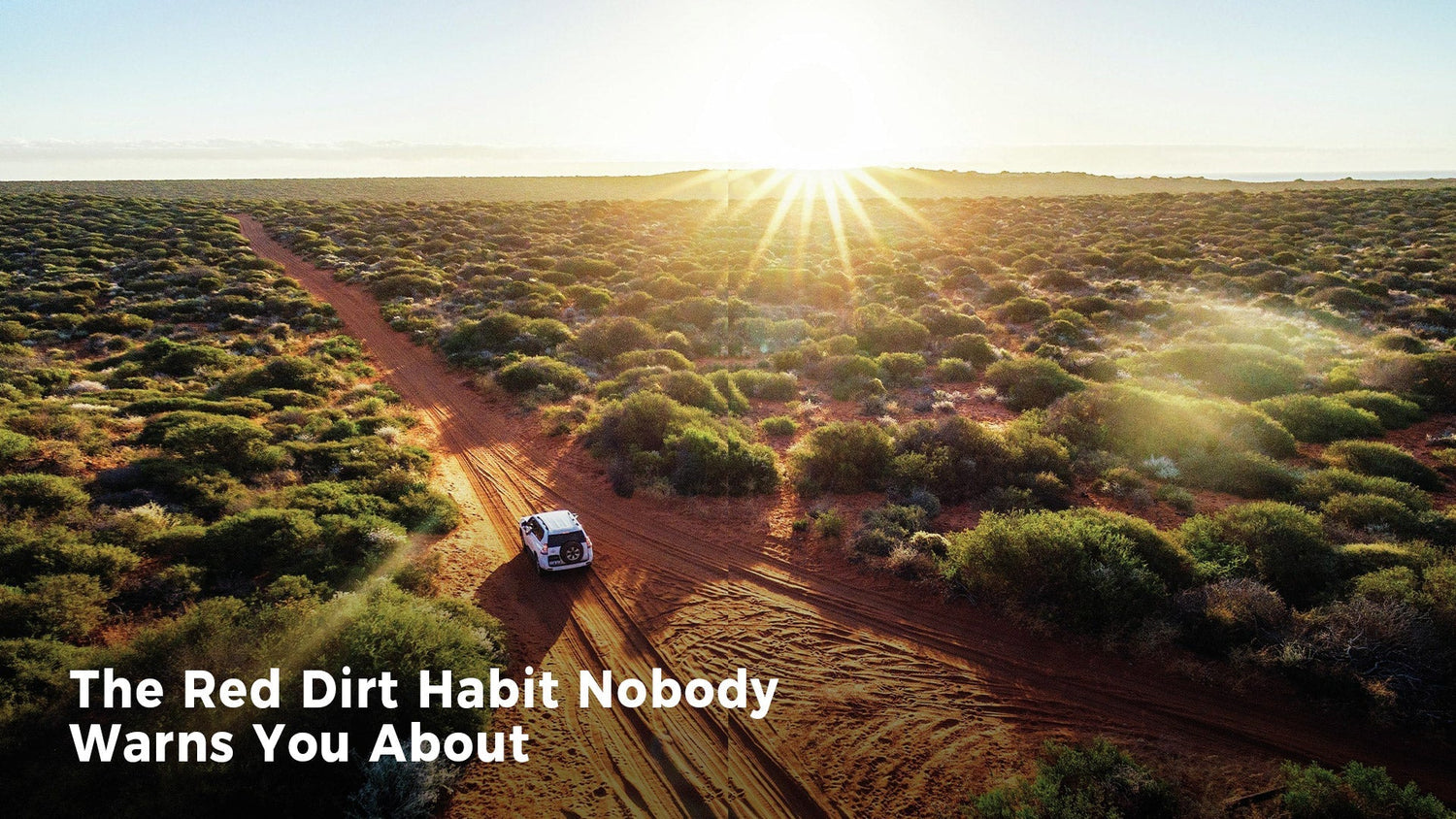
Most people think overlanding begins as a hobby: a weekend away, a rooftop tent on sale, a recovery kit thrown in the back just in case.
Then a few months pass and you are checking weather maps during lunch, saving remote campsites on your phone, and discussing tyre pressures with strangers as if this is completely normal.
Once red dirt finds its way into your routine, it rarely leaves quietly.
How It Usually Begins
Nobody sets out to become the person who disappears down remote tracks every second weekend. It usually starts much smaller.
- A gravel road somewhere inland
- A quiet river bend
- A basic campsite with just enough flat ground
- One night where the silence feels better than expected
Then something shifts. City noise feels louder when you get home. Weekends start looking different. The vehicle stops being simple transport and becomes a rolling base for the life you keep trying to get back to.
Dust Will Get Everywhere
One thing inland Australia teaches quickly is that dust is not a minor inconvenience. It creeps into windows, clothes, cooking gear, electronics, drawers, sleeping bags - somehow into places that looked properly sealed.
After enough corrugated roads, unsecured gear starts rattling itself apart. That is why serious touring setups tend to move away from loose tubs and rushed packing, and toward protected storage that can survive repeated vibration.
The San Hima 4WD Drawer System keeps recovery tools, cooking gear, and emergency supplies organised and easy to access, especially when stress is already high on a remote drive. After hundreds of kilometres of corrugations, clean storage starts to feel less like a luxury and more like a basic requirement.

Recovery Gear Stops Feeling Like Emergency Stuff
At first, recovery equipment sits untouched and slightly dramatic, something you bought hoping never to use. Eventually, it becomes part of the rhythm of travel.
- You air down before the track gets difficult
- You check the line before committing
- You keep the gear where it can be reached quickly
Not because you expect trouble every trip, but because remote tracks change without warning: a washed-out climb, unexpected mud, hidden ruts beneath dry grass, or one bad decision at the end of a long day.
The BUNKER INDUST Recovery Kit bundles essential recovery gear such as snatch straps, shackles, gloves, and a winch dampener, helping drivers respond more calmly when conditions turn awkward. After enough trips, recovery gear stops feeling like emergency equipment. It becomes part of travelling properly.

Campsites Simplify Naturally
New overlanders often overpack. Too many lights, too many gadgets, too much gear that only gets used once because it takes too long to unpack.
Over time, the setup gets simpler: shelter where you cook, a comfortable sleeping system, reliable power, water within reach, and a fire when conditions allow.
The San Hima 12V 160W Folding Solar Blanket suits that more practical style of travel. It packs compactly for short trips, yet can help charge small devices and auxiliary batteries during off-grid stays. Lightweight gear earns its place because it actually gets used.

Outback Nights Still Feel Wild
No matter how many trips you take, remote Australia keeps its scale after dark. Wind moves differently. Silence feels heavier. Dingoes call from somewhere you cannot see. The stars crowd out every city light you forgot you were missing.
That is usually when the habit makes sense. Not the driving alone. Not just the camping. It is the mental reset that comes when normal life sits far enough behind you.
Smaller, Smarter Setups Are Winning
The strongest trend in Australian overlanding is not simply bigger rigs. It is smarter systems that pack quickly, stay organised, handle rough roads, and work for both short escapes and longer expeditions.
The simpler the system, the more often people actually leave town. Oversized setups look impressive online; dependable ones get used on Friday afternoons.
What Experienced Overlanders Pack
- Recovery versatility
- Dust-resistant storage
- Compact power solutions
- Lightweight camping systems
- Fast camp setup
- Reliable communications
- Vehicle self-sufficiency
Flashy gear rarely survives the long-term packing list. Dependable gear does.
FAQ - Remote Touring & Overlanding Australia
What is overlanding?
Overlanding is self-reliant, vehicle-based travel built around remote exploration, camping, and long-distance touring.
Why use vehicle drawers or cargo storage?
They protect gear from dust, weather, and road vibration while keeping important items organised and reachable.
Are portable solar blankets worth it?
Yes. A compact solar blanket is useful for lightweight off-grid power, especially when charging devices or supporting auxiliary batteries.
Final Thoughts
Outdoor travel changes people quietly. At first, it is just a weekend hobby. Then you start measuring life by weather windows, fuel range, and how quickly you can leave town once work ends.
Somewhere along the way, red dirt stops feeling like a destination. It starts feeling familiar.



Leave a comment
This site is protected by hCaptcha and the hCaptcha Privacy Policy and Terms of Service apply.