


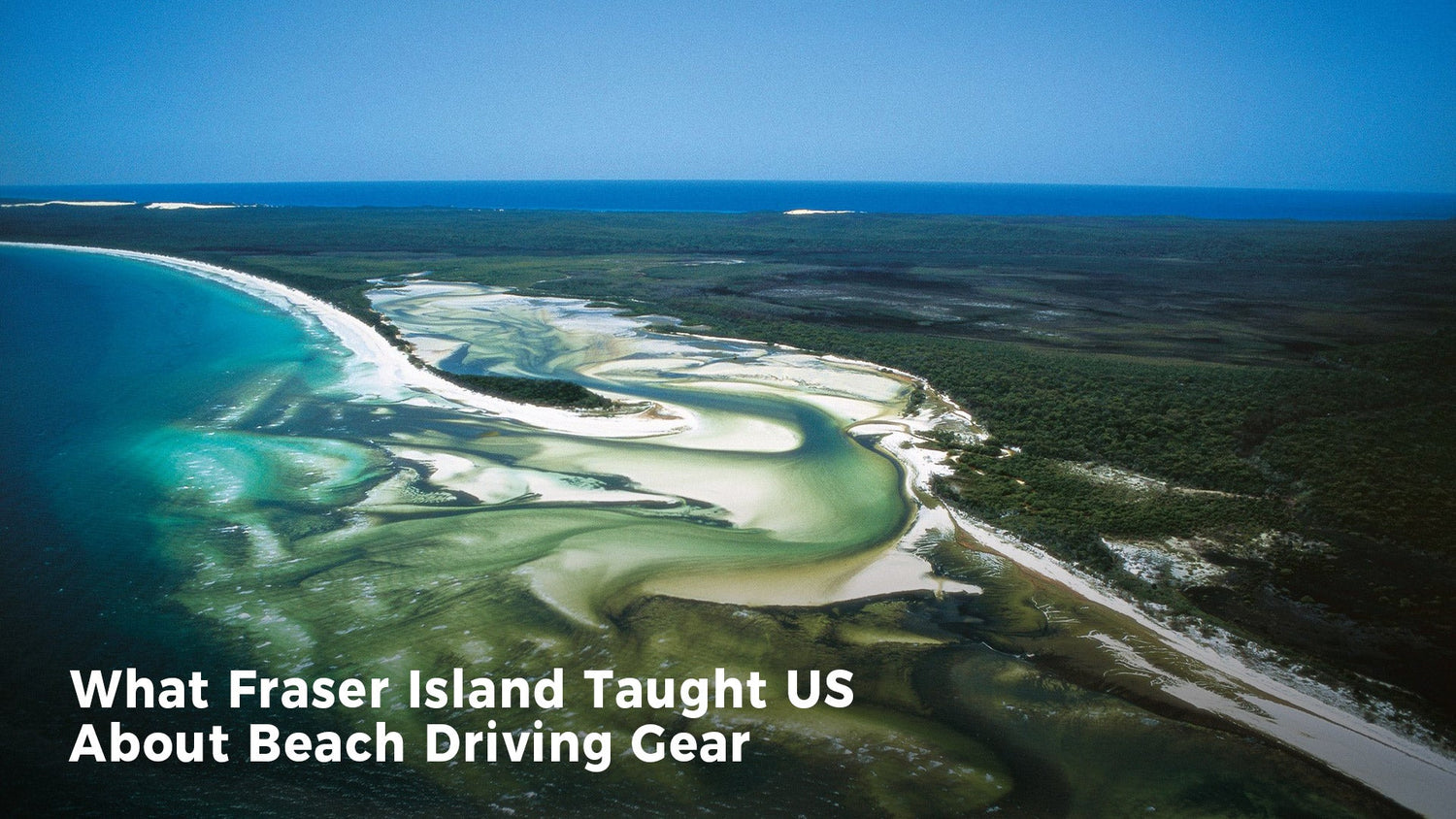
Someone grabbed a shovel. Someone checked the tide. Someone finally admitted we should have aired down properly an hour earlier. Beyond camp, the ocean kept rolling in as if none of this mattered.
That night, Fraser Island reminded us that beach driving looks much easier online than it feels in real life.

The Problem With Sand Is How Fast Conditions Change
Earlier that afternoon, the beach felt simple: firm sand, smooth lines, plenty of traction. By nightfall, rain had softened everything, and the track back toward camp became soft enough to swallow tyres within seconds.
That is what catches people out on Fraser Island. One section feels hard-packed and predictable. The next turns into deep powder without warning, especially after rain, traffic, or a changing tide.
Most sand recoveries begin before the vehicle actually gets stuck. Usually, they begin with tyre pressures.

Lesson #1: Fast Shelter Setup Matters More Than People Think
When sideways rain hits camp, nobody cares how impressive the setup looks. You care about speed, stability, and whether dinner can still happen without half the campsite blowing into the dunes.
The travellers who stayed comfortable that night were usually the ones using shelter systems designed for repeated bad weather, not occasional fair-weather weekends. It changed how we thought about awnings, camp layout, and what should stay packed closest to the door.
Recovery Stops Feeling Embarrassing After Your First Fraser Trip
At some point on Fraser Island, almost everybody gets stuck. Even experienced drivers misjudge soft sand, especially when weather, traffic, and tiredness start stacking up.
The difference is that experienced beach travellers recover earlier and faster because they expect the island to change. That mindset matters, especially when the tide is moving closer to the vehicle and every delayed minute becomes more expensive.
Nights on Fraser Feel Different After the Day Visitors Leave
Once the beach quiets down, Fraser changes personality. The wind cools. The stars take over. The island feels bigger, darker, and far more remote than it did during the afternoon.
Those are the moments that stay with you: late-night noodles under shelter, wet recovery boards drying beside the vehicle, headlamps moving between campsites, and the sound of tyres crunching across sand somewhere beyond the dunes.

Lesson #2: Good Lighting Changes Camp Life Completely
Beach campsites absorb light differently from inland camps. Sand reflects unevenly, salt moisture fogs lenses, and soft access tracks become harder to read once the sun drops.
The LIGHTFOX Cygnus 5” LED Driving Lights made late-evening beach access noticeably safer during low-visibility conditions, while also helping illuminate camp entry points after dark. Spotting washouts, soft patches, and uneven terrain becomes much easier when visibility improves properly.

What We Learnt After Fraser Island
The trips people remember most are rarely the smooth ones. They are the messy recoveries, flooded camps, wind-burnt dinners, and the moments when everyone has to adapt quickly.
Fraser Island rewards people who adjust early rather than chase perfect conditions. Good gear is not there to make the trip look impressive. It is there to reduce stress when the weather, tide, and sand stop cooperating.
Fraser Island Beach Driving Checklist
- Tyre deflators
- Portable air compressor
- Recovery tracks
- Rated recovery points
- Bottle jack or off-road jack
- Weather-resistant awning
- Sand shovel
- LED camp lighting
- Extra drinking water
- Tide charts and recovery gear
On Fraser, conditions can change faster than many first-time visitors expect, so the best setup is the one that helps you respond before a small problem becomes a serious one.

FAQ - Fraser Island Sand Driving & Beach Camping
Do you need a 4WD for Fraser Island?
Yes. Fraser Island requires a capable 4WD because of deep sand, soft inland tracks, and beach driving conditions.
What tyre pressure should you run on sand?
Most drivers reduce tyre pressures significantly for better flotation, but the right PSI depends on tyre size, vehicle weight, load, and current track conditions.
Is recovery gear necessary on Fraser Island?
Yes. Soft sand recoveries are common, particularly after rain, during busy travel periods, or near beach access points.
Can you camp anywhere on Fraser Island?
No. Camping is only permitted in designated campground areas and requires the appropriate permits.
Final Thoughts
Fraser Island humbles people quickly. The sand changes, weather moves fast, and small preparation mistakes become obvious once conditions deteriorate.
But later at night, once camp settles and the ocean fades into the background, the chaos starts to feel strangely worth it. Beach camping was never really about perfect comfort. It is about adapting as conditions change—and trusting the gear you brought when they do.

Leave a comment
This site is protected by hCaptcha and the hCaptcha Privacy Policy and Terms of Service apply.