


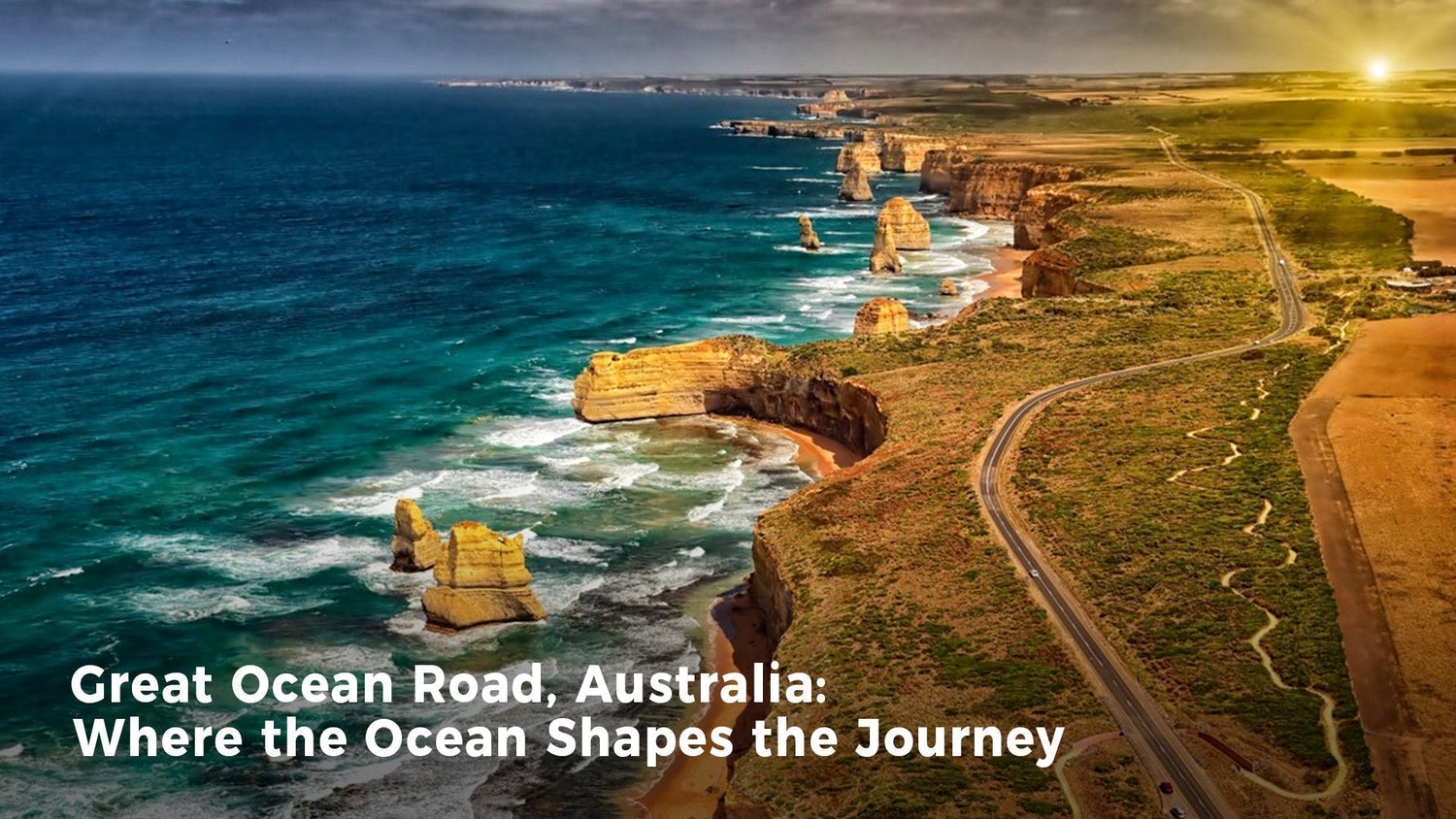
Great Ocean Road, Australia:
Where the Ocean Shapes the Journey
There’s a stretch of coastline along southern Australia where the road feels less engineered and more carved by the sea itself.
The Great Ocean Road winds through Victoria’s rugged coastline, passing limestone cliffs, rainforest pockets, crashing surf, and endless ocean horizons. What begins as a scenic drive gradually becomes something slower, quieter, and far more immersive.
Windows down. Salt in the air. Wind that never fully settles.
For many travelers, a Great Ocean Road road trip is less about reaching destinations and more about learning how to move differently through the landscape.
Where the Ocean Leaves Its Mark
The Southern Ocean is relentless here.
For thousands of years, waves have shaped the coastline into towering cliffs and dramatic limestone formations. Among them, the most iconic remain the Twelve Apostles Australia is famous for today.
At sunrise or late afternoon, the landscape changes completely. Light moves across the limestone stacks while dark water crashes below, making the entire coastline feel alive and constantly shifting.
Arriving early makes all the difference. Before the crowds gather, the platforms are quieter, the air colder, and the ocean louder.
It feels less like sightseeing and more like witnessing something still being formed.

The Road Is Meant to Be Interrupted
Driving the Great Ocean Road isn’t efficient—and that’s exactly the point.
You stop constantly. Sometimes for official lookout points. Sometimes because the coastline simply asks you to.
A quick pull-off becomes coffee beside the vehicle. A five-minute stop turns into an hour watching weather roll across the cliffs.
That slower rhythm makes simple vehicle organisation surprisingly important. Jackets, cooking gear, recovery tools, camera bags, and supplies move in and out constantly throughout the day. Storage systems like the San Hima Lightweight 4WD Rear Drawer help keep gear organised and instantly accessible, making repeated roadside stops feel far less cluttered and far more efficient throughout the journey.
For travelers continuing into remote coastal sections after sunset, visibility becomes part of the experience too. Lightfox Iconic Series 9 inches LED driving lights can make early morning departures and winding coastal roads feel far more comfortable during changing weather and low-light conditions.
And in gravel lookout areas or beachside picnic spots, the San Hima Folding Camping Wagon feels perfectly suited to the relaxed pace of coastal touring. Its all-terrain wheels, generous storage capacity, and compact fold-down design make transporting chairs, cooking gear, cameras, and beach essentials far easier across uneven coastal terrain.

A Better Great Ocean Road Itinerary Leaves Room for Detours
The best Great Ocean Road itinerary usually isn’t the most structured one.
Some of the most memorable places are the unexpected ones: hidden beaches, rainforest pull-offs, quiet walking trails, and smaller Great Ocean Road lookout points discovered between major landmarks.
This slower style of travel changes the entire pace of the journey.
Coffee cools beside the vehicle while waves break below the cliffs. Wind moves steadily beneath the awning. The San Hima Folding Camping Chair unfolds into a surprisingly comfortable place to settle in for the afternoon, with its reclining design, padded support, adjustable headrest, and extra-wide seat making long coastal stops feel less temporary and far more relaxing. Suddenly, nobody is in a hurry anymore.
A setup like the San Hima Karlu Frontier 270° Awning fits naturally into this kind of coastal touring—fast to deploy, dependable in shifting coastal weather, and ideal for turning simple roadside pull-offs into comfortable oceanfront rest stops.
For travelers extending the journey into overnight stays, the coastline becomes less of a route and more of a temporary home.

Slower Travel Changes What You Notice
There’s a temptation to “complete” the Great Ocean Road—tick off landmarks, capture photos, and move on.
But the experience becomes far richer when you slow down.
Walk beyond the main viewing platforms. Spend time on short coastal trails. Sit quietly long enough to hear the ocean instead of traffic.
Eventually, smaller details begin to emerge: eroded limestone textures, shifting tide patterns, and changing shadows moving across the cliffs.
They’re subtle moments—but usually the ones people remember longest.
Evenings Along the Coast
As daylight fades, the coastline softens.
The wind eases slightly. Shadows stretch across the water. Crowds thin out around the major viewpoints.
For travelers continuing further along a coastal road trip Australia route, evenings often settle naturally into overnight camping stops.
Slimline rooftop tents like the San Hima Kalbarri Lite Rooftop Tent suit this style of travel especially well, offering quicker overnight setup, reduced wind resistance along coastal highways, and a more streamlined touring experience across long distances.
And once darkness settles in, the experience becomes remarkably simple:

When to Visit the Great Ocean Road
Timing changes the experience significantly.
Early mornings offer softer light, fewer vehicles, and quieter lookout points. Late afternoons bring warmer tones across the cliffs and ocean.
Summer remains the busiest season for road trip Victoria travel, while spring and autumn usually provide a better balance between weather, traffic, and solitude.
Conditions can also shift quickly along Australia’s southern coastline. Sea mist, sudden rain, and coastal winds can arrive without warning, making flexible touring setups especially valuable.
Regardless of season, the approach stays the same:
Slow down.
Stop often.
Stay longer than planned.

The Part That Stays With You
Long after the drive ends, something about the Great Ocean Road lingers.
Maybe it’s the repetition of waves against limestone cliffs. Maybe it’s the constantly changing weather and light. Or maybe it’s simply the feeling of moving through a place that refuses to be rushed.
It’s more than a scenic drive Victoria is known for.
It’s a reminder that some journeys become meaningful precisely because they ask you to slow down enough to notice them.
And like many of Australia’s most remarkable landscapes, it leaves you feeling as though you only experienced part of it—which is exactly why people return.

Leave a comment
This site is protected by hCaptcha and the hCaptcha Privacy Policy and Terms of Service apply.